World Day Against Trafficking in Persons
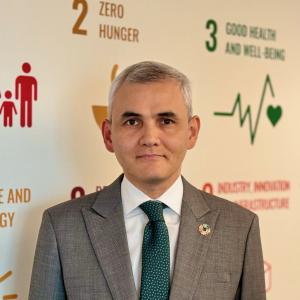
Opening Remarks by Bakhodir Burkhanov, UN Resident Coordinator

- Mr. Alomlangsy Rajvong, Deputy Director General, Ministry of Foreign Affairs
- Ms. Michelle Outlaw, Chargé d'Affaires, Embassy of the United States of America to Lao PDR
- Distinguished participants, esteemed colleagues and partners
- Ladies and gentlemen:
On behalf of the United Nations Country Team in Lao PDR, it is my pleasure to join you on the occasion of the World Day against Trafficking in Persons. Today in Vientiane we launch the regional awareness campaign on trafficking in persons for forced criminality in scam centers, called “Trapped in Scam Crime”.
I start by expressing our sincere thanks to the Government of Lao PDR, particularly the Ministry of Foreign Affairs, for its leadership and engagement in advancing our shared efforts to combat trafficking in persons.
As we commemorate the World Day against Trafficking in Persons, we join the global community in reaffirming our commitment to end human trafficking in all its forms. This year's observance reminds us that trafficking is constantly evolving, requiring equally innovative, coordinated and victim-centered responses.
Over recent years, we have seen a troubling shift in trafficking patterns. Organized criminal groups are exploiting digital technologies and socio-economic vulnerabilities to force thousands of people – women, men and children – into scam operations. UN analysis shows this form of trafficking has grown rapidly across South-East Asia, affecting victims from dozens of countries. Survivors report deception, coercion, violence, forced labor and ill-treatment. Many were simply seeking employment and were recruited with false promises of lucrative jobs, often involving people they trusted: family members, friends, co-workers or online acquaintances.
This is not only a criminal justice problem; it is a human rights challenge and a development problem. It undermines safe migration, decent work, and sustainable development, more broadly. Addressing it requires that the rights, dignity and protection of victims remain at the center of our response. Individuals deceived or coerced into scam operations need protection as victims of trafficking, rather than treated solely as perpetrators of crimes they were compelled to commit. The Non-Punishment Principle (NPP), a legal concept enshrined in international frameworks, is essential to ensuring victims and survivors can safely seek help, access support, and rebuild their lives.
Yet the problem is not abating. As a new UNODC report entitled “An Interconnected Criminal Ecosystem: Transnational Organized Crime Threat Assessment for Southeast Asia” highlights, scam centers in the region continue to expand, with new locations and larger operations. People around the world continue to be deceived and defrauded, while the number of trafficked victims is not decreasing. This reality underscores the urgency of strengthening prevention, protection and accountability through closer cooperation across borders and sectors.
Distinguished audience:
In the face of this growing global challenge, the Government of Lao PDR has stepped up efforts in addressing online scam centers and related crimes. Last October, Lao PDR officially signed the UN Convention against Cybercrime, recognizing it as an essential legal framework to combat persistent threats such as online scams, transnational cyber fraud, and human trafficking. Further, a directive from His Excellency Prime Minister Sonexay Siphandone in April 2026 called for stronger nationwide action against online fraud and cybercrime. Lao authorities have conducted raids, made arrests, strengthened law enforcement readiness, and increased regional cooperation to prevent scam operations from re-surfacing.
On this World Day against Trafficking in Persons, let us reaffirm that awareness remains one of our strongest tools for prevention. By informing communities, strengthening partnerships, and amplifying the voices of survivors, we can help prevent more people from falling victim to trafficking and to hold those responsible to account.
The #TrappedInScamCrime campaign, developed by the UNODC’s Regional Office for South-East Asia and the Pacific, in partnership with the International Justice Mission and the U.S. Department of State, is one important way we are turning that commitment into action.
From the outset, survivors have guided our understanding of this phenomenon – from recruitment to deception and coercion – helping shape the tone and direction of this initiative. Campaign materials, available in nine languages, including Lao and English, will reach people where they are – through social media, at airports and border crossings, in schools and universities, and through trusted community actors.
This campaign is about prevention, empowerment and solidarity. It equips individuals and families with clear information, helps communities recognize the warning signs of trafficking, and reinforces our shared responsibility to protect those most at risk. Importantly, it is pursued in the region simultaneously, allowing awareness and action across borders.
Ladies and gentlemen:
Prevention also requires stronger cooperation with tech companies and online platforms, whose services are often misused by traffickers for criminal activities. Consistent with international standards on business and human rights, companies have an important role to play in identifying and addressing risks of exploitation linked to their platforms. Earlier this week, I addressed a training for the public sector on cybersecurity, organized by the Economic and Social Commission for Asia and the Pacific in collaboration with the Ministry of Communications and Technology – another example of how Government and tech sector can work together to address crime and misinformation.
We are now just weeks away from signing the Lao PDR – UN Cooperation Framework 2027-2031, which has a dedicated output to safeguard against risks of transnational crime. We have already stepped up our work in this area by enhancing collaboration between UN agencies by bringing together the expertise of UNODC, IOM, OHCHR, UNICEF and others to tackle inter-related challenges.
I am particularly pleased that today’s event will also have a youth-focus – and I would also like to thank UNICEF and IOM for collaborating with UNODC in organizing youth-focused activities to raise awareness on scam centres. Early warning on potential risks can go a long way towards preventing and protecting those most at risk.
In conclusion, I reaffirm the commitment of the UN Country Team in Lao PDR to national and international partners as we coalesce to stamp out scams and end human trafficking in all its forms.
Thank you.



ຄຳປາໄສໂດຍ
ບັນດາເປົ້າໝາຍທີ່ພວກເຮົາສະໜັບສະໜູນຜ່ານຂໍ້ລິເລີ່ມນີ້