
Launching Event of the Inclusive Risk Communication Initiative and the Open Call on Inclusive Multi-Hazard Early Warning Systems
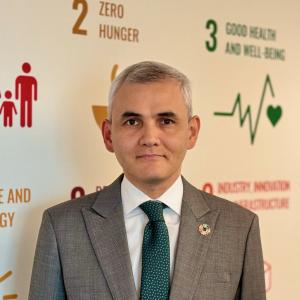
Opening Remarks by Bakhodir Burkhanov, UN Resident Coordinator

Excellency, Dr. Chanthakhone Boualaphan, Vice-Minister of Agriculture and Environment
Distinguished representatives from the ministries, departments,
Development partners, civil society, OPDs, youth and media
Ladies and gentlemen:
Sabaidee ton sao!
Welcome to the launch of the Inclusive Risk Communication Initiative and the Open Call on Inclusive Multi-Hazard Early Warning Systems.
I begin by thanking the Ministry of Agriculture and Environment, and in particular the Department of Meteorology and Hydrology, for hosting today’s launch and for its continued leadership in providing much-needed timely forecasts and warnings to the people of Lao PDR. I also thank the Department of Social Welfare of the Ministry of Labour and Social Welfare and the Ministry of Technology and Communications for the collaboration on this initiative.
I also acknowledge the participating agencies – UNDRR, WFP, UNDP, UNICEF, IOM, People in Need, CARE International, Save the Children and the Lao CSO Network – for bringing their expertise and resources together behind one government-led effort.
Our meeting today carries a special meaning. It is the International Day for Disaster Risk Reduction, and this year’s global theme is “Resilience Starts at Home”. It is also Lao PDR’s National Disaster Management Day, as set out in the Law on Disaster Management.
The home is where the impacts of disasters are felt first. It is also where protective action begins – when a family receives a warning, understands it, and knows what to do.
This launch comes at an opportune moment. Only last month, the Government and humanitarian partners jointly assessed the impacts of this year’s floods, storms and landslides across six provinces in northern, central and southern Lao PDR. Provincial reports show that more than 255,000 people were affected across these provinces, underscoring the need for early warnings that reach everyone and help people take timely action.
Early warnings are among the most effective ways to save lives and protect livelihoods. UNDRR’s Global Assessment Report 2025 estimates that every dollar invested in disaster risk reduction saves around fifteen dollars in recovery costs. That’s an undeniable return on investment. But the same report reminds us that even where early warning systems exist, they may not reach the most vulnerable, or be trusted enough to trigger action.
Esteemed participants:
Over the past five years, over 180 meteorological and hydrological monitoring stations have been modernized in Lao PDR, and disaster management committees have been established at province, districts and village levels. This is a remarkable progress achieved over a relatively short span of time.
Lao PDR was also among the first countries to roll out the UN Secretary-General’s Early Warnings for All initiative, and the Government of Lao PDR has put in place a national roadmap for 2024 to 2027.
The 2025 National Weather Forecast and Early Warning System Perception Survey, led by the Department of Meteorology and Hydrology, shows us where our attention is needed next. Fifty-nine percent of respondents had received an early warning message, but 41 percent had not.
Globally, more than half of persons with disabilities report that they cannot access disaster risk information in formats they can use. In Asia, this rises to 64 percent. This is why the Inclusive Risk Communication Initiative matters. It does not create a new or parallel system. It builds on the official forecasts and warnings of the Department of Meteorology and Hydrology, and helps turn them into messages that every household can receive, understand, trust and act upon.
The inclusive risk communication initiative directly supports the Law on Disaster Management, the National Strategy on Disaster Risk Reduction 2021–2030, the 10th National Socio-Economic Development Plan, and the Early Warnings for All roadmap.
The Open Call for Short Videos, to be launched today, puts this approach into practice. It invites young people, students, community storytellers and content creators, including from ethnic communities and organizations of persons with disabilities, to help official warnings reach the people who are most often left out.
As we launch this Initiative, I would like to highlight three priorities.
First, I call on development partners to support this important nationally-led initiative. Every message produced or revised under this initiative is linked to saving the lives and livelihoods of the people who are most at risk. Let us join hands, not for a single event, but to institutionalize effective and inclusive risk communication.
Second, let us design our forecasting and early warning messages keeping in mind the people who are at most risk – persons with disabilities, older people, women, children, youth and ethnic communities. Inclusion is not an add-on; it is what makes a warning work.
And third, let us work as one. With resources under pressure, pooling expertise and funding, and coordinating through the existing Early Warnings for All Technical Working Group, will help us avoid duplication and complement each other’s efforts.
Colleagues and friends:
I encourage all of you to promote Open Call through your networks, and to take an active part in the stock-take and co-design work in the coming months.
On behalf of the United Nations in Lao PDR, I reaffirm our commitment to supporting the Government and communities in Lao PDR to help protect each and every person through timely, accurate and accessible early warnings. We remain ready to work closely with the Ministry of Agriculture and Environment, the Ministry of Labour and Social Welfare, the Ministry of Technology and Communications, provincial authorities and all partners in that regard.
Let me conclude with the message of the day: Resilience starts at home – and it starts with a warning that reaches everyone.
Thank you – khob chai.


ຄຳປາໄສໂດຍ
ບັນດາເປົ້າໝາຍທີ່ພວກເຮົາສະໜັບສະໜູນຜ່ານຂໍ້ລິເລີ່ມນີ້

