

Latest
Press Release
21 October 2026
Lao PDR and United Nations launch new five-year Cooperation Framework to accelerate sustainable development
Learn more
Speech
21 October 2026
Launch of the Lao PDR – United Nations Sustainable Development Cooperation Framework 2027-2031
Learn more
Speech
13 October 2026
Launching Event of the Inclusive Risk Communication Initiative and the Open Call on Inclusive Multi-Hazard Early Warning Systems
Learn more
Latest
The Sustainable Development Goals in Lao PDR
The Sustainable Development Goals (SDGs) are a global call to action to end poverty, protect the earth’s environment and climate, and ensure that people everywhere can enjoy peace and prosperity. In addition to 17 global goals, in 2016 the Government of Lao PDR has formally launched the national SDG18, ‘Lives Safe from UXO’ (unexploded ordnance), in the presence of the UN Secretary-General Ban Ki-moon. As UXO remains an issue affecting national development in multiple dimensions, Lao PDR's output under the SDG18 contributes to the national outcomes under all the other SDGs. On the present map, some of the activities attributed to Vientiane are those which are carried out across the whole country.
Publication
31 March 2026
UN Country Annual Results Report 2025
The 2025 Annual Results Report highlights the UN's support to Lao PDR's national development priorities during the fourth and penultimate year of the Sustainable Development Cooperation Framework (2022–26). Showcasing the collective efforts of 25 UN Agencies, Funds, and Programmes, the report presents progress made on advancing people's well-being and resilience, strengthening governance and inclusive prosperity, and sustaining policy reforms—even amid significant reductions in official development assistance and major national institutional transitions.
Through human-interest stories, the report brings to life the impact of UN interventions, from communities recovering after widespread flooding to mothers and babies benefiting from improved health services and youth driving forward the LaoUN70 vision. It also reflects on the UN's role in supporting Lao PDR's preparations for LDC graduation, the formulation of the 10th National Socio-Economic Development Plan, the 14th High-Level Round Table Meeting and the signing of the Third Vientiane Declaration, and the launch of the 2027–2031 Cooperation Framework—shaping a more resilient, inclusive, and sustainable future for the people of Lao PDR.
Through human-interest stories, the report brings to life the impact of UN interventions, from communities recovering after widespread flooding to mothers and babies benefiting from improved health services and youth driving forward the LaoUN70 vision. It also reflects on the UN's role in supporting Lao PDR's preparations for LDC graduation, the formulation of the 10th National Socio-Economic Development Plan, the 14th High-Level Round Table Meeting and the signing of the Third Vientiane Declaration, and the launch of the 2027–2031 Cooperation Framework—shaping a more resilient, inclusive, and sustainable future for the people of Lao PDR.
1 of 5

Publication
01 April 2024
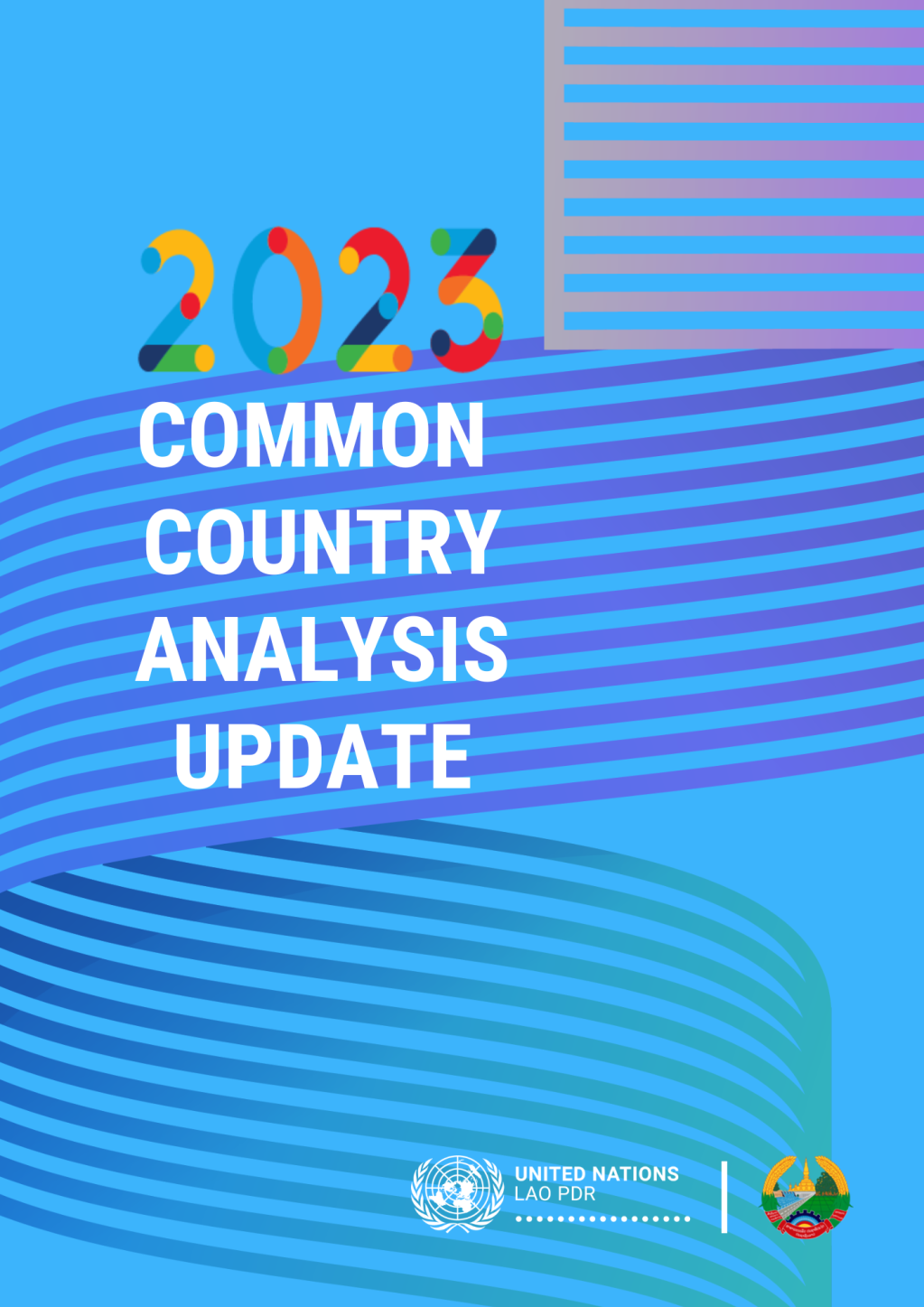
2023 Common Country Analysis Update
The Common Country Analysis (CCA) is a reflection of evolving country contexts that identifies key development challenges. The CCA is an essential tool used by the UN country team (UNCT) to ensure appropriate and focused programming that tackles the right issues in the right ways. The UNCT is implementing the Lao PDR-UN Sustainable Development Cooperation Framework 2022-2026 (UNSDCF) to improve the efficiency and effectiveness of its programming, and the regular update of the CCA is a crucial part of this effort.The UNSDCF, jointly designed by the Government of Lao PDR and 25 UN agencies, funds, and programmes, aligns with national development priorities and builds on the CCA's findings. To ensure that the UN programming remains relevant and up-to-date, the CCA is reviewed annually, and the first update was released in December 2022. The update reflects new developments and highlights emerging challenges that require changes to UN programming using a simple color-coding. The CCA update was prepared by the Programme Oversight Group and endorsed by the UNCT and the Lao PDR Government.
1 of 5
Publication
02 November 2022
Joint Programme on High-Frequency Data: Bulletin 1 Vulnerable Groups
This information bulletin was jointly developed by the Macroeconomic Research Institute, LASES, and the UN in Lao PDR under the Joint Programme on “High Frequency Data” in response to the current food, energy, and financing crises. The bulletin spotlights Vulnerable Groups in the context of the financial and socio-economic challenges in Lao PDR and is the first bulletin in a series as part the Joint Programme. The second one will provide information on “Food Security and Livelihoods” and the third bulletin is on “Macroeconomic analysis of the country’s economy”.
More about the programme:
The Joint Programme was set up in the context of the rapidly depreciating value of the KIP and the rising prices for food, fuel and fertilisers which came on top of the already exacerbated financial and socio-economic vulnerabilities. The current shocks can affect a wide range of individuals in many areas ranging from employment status, education, food consumption to gender-based violence. To capture these recent manifestations and potential trends, the Joint Programme considers collected data from households and businesses across the country as well as macro-economic developments.
Until December 2022, the data collected and related analysis will be made available to interested stakeholders and distributed through three information bulletins and discussed during a multi-stakeholder workshop towards the end of the programme. The outcome of this workshop as well as the most significant findings of the three bulletins will be summarised in a final policy report. This Joint Programme is funded by the Joint SDG Fund’s Development Emergency Modality, which was set to give more than 100 UN country teams worldwide the opportunity to receive fast and flexible seed financing to support governments in understanding the current changes and needs to tackle the ongoing global food, energy, and financing crises.
1 of 5

Publication
23 December 2022
Joint Programme on High-Frequency Data: Bulletin 2 - Food Security and Livelihoods
This information bulletin was jointly developed by the Macroeconomic Research Institute, LASES, and the UN in Lao PDR under the Joint Programme on “High Frequency Data” in response to the current food, energy, and financing crises. The bulletin spotlights Vulnerable Groups in the context of the financial and socio-economic challenges in Lao PDR and is the second bulletin in a series as part the Joint Programme. The second one provides information on “Food Security and Livelihoods” and the third bulletin will be on “Macroeconomic analysis of the country’s economy”.
More about the programme:
The Joint Programme was set up in the context of the rapidly depreciating value of the KIP and the rising prices for food, fuel and fertilisers which came on top of the already exacerbated financial and socio-economic vulnerabilities. The current shocks can affect a wide range of individuals in many areas ranging from employment status, education, food consumption to gender-based violence. To capture these recent manifestations and potential trends, the Joint Programme considers collected data from households and businesses across the country as well as macro-economic developments.
Until December 2022, the data collected and related analysis will be made available to interested stakeholders and distributed through three information bulletins and discussed during a multi-stakeholder workshop towards the end of the programme. The outcome of this workshop as well as the most significant findings of the three bulletins will be summarised in a final policy report. This Joint Programme is funded by the Joint SDG Fund’s Development Emergency Modality, which was set to give more than 100 UN country teams worldwide the opportunity to receive fast and flexible seed financing to support governments in understanding the current changes and needs to tackle the ongoing global food, energy, and financing crises.
1 of 5

Publication
08 May 2023
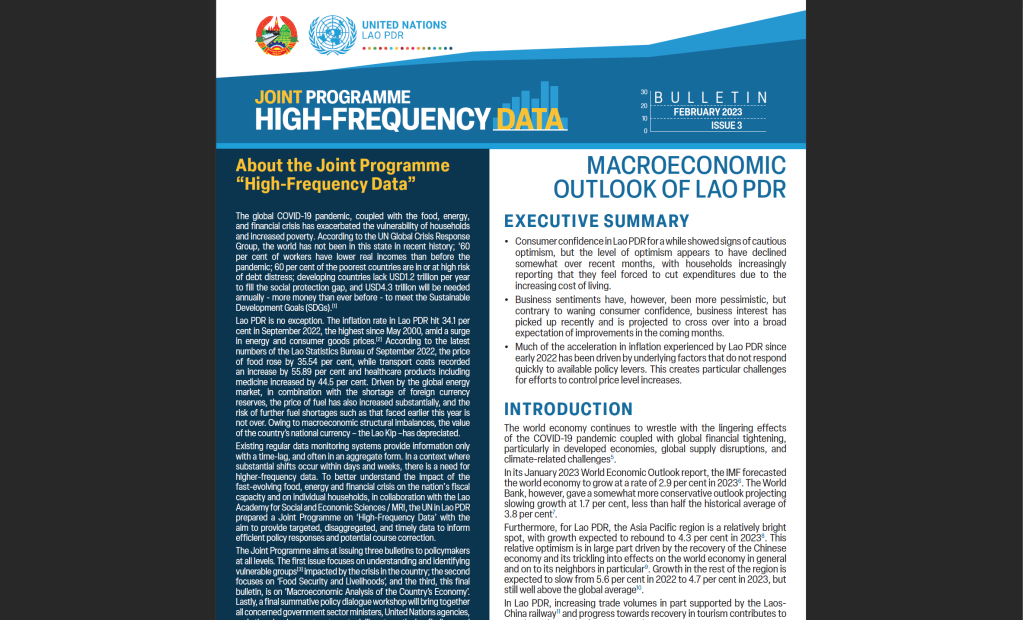
Joint Programme on High-Frequency Data: Bulletin 3 - Macroeconomic Outlook of Lao PDR
This information bulletin was jointly developed by the Macroeconomic Research Institute, LASES, and the UN in Lao PDR under the Joint Programme on “High Frequency Data” in response to the current food, energy, and financing crises. The bulletin spotlights Vulnerable Groups in the context of the financial and socio-economic challenges in Lao PDR and is the second bulletin in a series as part the Joint Programme. The second one provides information on “Food Security and Livelihoods” and the third bulletin will be on “Macroeconomic analysis of the country’s economy”.
More about the programme:
The Joint Programme was set up in the context of the rapidly depreciating value of the KIP and the rising prices for food, fuel and fertilisers which came on top of the already exacerbated financial and socio-economic vulnerabilities. The current shocks can affect a wide range of individuals in many areas ranging from employment status, education, food consumption to gender-based violence. To capture these recent manifestations and potential trends, the Joint Programme considers collected data from households and businesses across the country as well as macro-economic developments.
Until December 2022, the data collected and related analysis will be made available to interested stakeholders and distributed through three information bulletins and discussed during a multi-stakeholder workshop towards the end of the programme. The outcome of this workshop as well as the most significant findings of the three bulletins will be summarised in a final policy report. This Joint Programme is funded by the Joint SDG Fund’s Development Emergency Modality, which was set to give more than 100 UN country teams worldwide the opportunity to receive fast and flexible seed financing to support governments in understanding the current changes and needs to tackle the ongoing global food, energy, and financing crises.
1 of 5
Story
09 October 2026
The Stories Are Already Around Us. Are We Willing to Listen?
Some of the most important conversations in my office start without warning. Sometimes a colleague might stop by my office, sit down and immediately start talking. Sometimes they take a deep breath first, as if deciding where to begin. What follows is rarely a major crisis or an urgent situation. More often, it's about the everyday pressures that many of us experience but don't always talk about openly. Feeling overwhelmed. Feeling frustrated for a while. Navigating difficult relationships with colleagues. Worrying about family. Feeling tired in a way that sleep can't fix. Simply feeling off. One thing these conversations have taught me is that we often think emotional distress has to be significant or dramatic before it deserves attention. We reserve our concern and care for moments of visible crisis. But so much of life happens in the moments before a crisis. In those moments, people are rarely looking for perfect answers. More often, they simply want to be honest about how they're feeling. That is one reason why this year's World Mental Health Day theme, Lived Experiences Heard: Real Voices, Real Change, resonates so strongly with me. When we talk about mental health, we often focus on encouraging people to speak up, and rightly so. Creating environments where people feel safe enough to share their experiences is incredibly important. But I sometimes find myself wondering about the other side of that conversation. If nobody is willing to listen, would we still speak? Because the truth is that people are already sharing their lived experiences around us every day. They appear during tea breaks, in hallway conversations, before meetings begin, and in those quiet moments when someone pauses and asks if you have a few minutes to talk. In these moments, people give us glimpses into what they're carrying, what they're struggling with, and what they're trying their best to navigate. And sometimes the challenge is simply whether we're willing to slow down long enough to hear them. For me, listening is not always easy. My instinct has often been to help by finding solutions. When someone shared a problem, I immediately started thinking about what advice I could offer or what action could be taken. But I've come to realise that not every conversation needs an answer. Sometimes people don't need their problems solved. They simply need someone to listen. I think many of us hesitate when someone opens up because we're afraid of saying the wrong thing. Most of us aren't experts, and we worry about whether we're helping at all. What these conversations have taught me is that listening isn't about having the right answers. It's about genuinely wanting to understand another person's experience, offering our attention, curiosity, and the patience to simply hear someone out. To me, a safe space is simply knowing that you can speak honestly and be heard. In the workplace, that space isn't created by a policy or a slogan. It comes to life through everyday actions. Every time someone pauses what they are doing, puts aside their own work for a moment, and genuinely listens to a colleague, that space becomes real. That is why I think the quiet heroes in any workplace are the everyday listeners. Their actions may seem small, but they can make an enormous difference to someone who simply needs to feel heard. When I think about my own team, that's one of the things I value most. There isn't an expectation that we have to be at our best every single day. We all have moments when life feels heavier than usual. What matters is knowing that it's okay to acknowledge those moments and be honest about how we're doing. I've also been fortunate to have colleagues who check in on me during difficult times, just as they do for one another. Knowing that people genuinely care and are willing to listen makes a real difference. If we want to champion well-being in the communities around us, we have to start by caring for the people around us every day. Compassion isn't something we only promote externally. It's something we practice in the conversations we have, the support we offer, and the way we show up for one another. This World Mental Health Day, I'd like to offer a simple invitation. Check in on someone. Ask how they're doing, and stay long enough to hear the real answer. Sometimes, simply being present is enough. Because lived experiences are already here all around us. All they require is our willingness to hear them.
1 of 5

Story
11 September 2026
Shifting Perspectives: When Good Intentions Aren't Accessible
"It's an added operational cost if you want a truly accessible workplace. So — what would you do if we joined your office?" Metta asked.The question cut through our afternoon training session. We came from teams working on communications, data, and social protection, and we looked at each other and realised that none of us had an immediate answer. As UN development professionals, we thought we understood human rights well. We cite the UN Disability Inclusion Strategy (UNDIS) in our frameworks. We complete the mandatory training and receive a certificate. We talk easily about “leaving no one behind.”Yet Metta had simply asked what it would take for her to work beside us, and she stopped us cold.Metta Thippawong, Co-founder of DMAS and Director at COPE, together with Vinthong and Thongchanh, are advocates from DMAS, a local civil society organization. They did not come to lecture us. They came with hard questions, and they kept asking them. We thought we knew enough. We realised there was much more to learn.That week, the UN Country Team in Lao PDR stopped to listen. Following a senior management briefing, we spent a full day in a workshop designed and led by people who live the realities that UNDIS sets out on paper. What began as a training exercise became personal, for the three of us and for everyone in the room.Beyond the ChecklistThe UN has already taken steps towards disability inclusion. Across agencies, persons with disabilities are being recruited and supported in the workplace, and persons with disabilities and their representative organizations have been consulted in important UN processes, including the development of the Cooperation Framework and Common Analysis.This work is also increasingly bringing the UN Country Team together around a collective approach to inclusion. The recently launched UNV-led Disability Inclusion Campaign is creating space for agencies and colleagues across the UNCT to build a shared understanding of disability inclusion, raise awareness and consider how we can make our workplaces and programmes more inclusive.But the training made us ask a different question: not only what have we done, but what does meaningful inclusion look like in our everyday work?UNDIS calls for disability inclusion to be mainstreamed across our workplaces and programmes, from creating a culture of respect and inclusive employment, to ensuring disability data is collected and reflected in analysis, and that persons with disabilities are meaningfully engaged and consulted in programmes. As the day went on, we saw clearly that each of our jobs has an important role to play.In communications, we measure reach and visibility but do we always ask who our materials might leave out? Accessibility can too easily become something we add at the end of a campaign rather than consider from the start. A design intended for “everyone” may not be accessible to everyone.In our workplaces, the discussion struck closer to home. Individual agencies may already collect information about their staff and take steps to support colleagues with disabilities. But the training prompted us to consider whether we have a sufficiently shared understanding across the UN Country Team of the barriers our own colleagues may experience, and whether we are consistently creating the conditions for everyone to participate fully.The same applies to employment. The training reminded us that reasonable accommodation should be considered from the outset, rather than treated as an exceptional favour or an afterthought. An accessible workspace, flexible arrangements or other practical adjustments can be what enables a person with a disability to participate and contribute on an equal basis. Inclusion means anticipating these needs rather than waiting for someone to ask.Looking at Our Own SpacesThen the facilitators asked us to put down our pens and split into three groups, each given a single ordinary task starting at the same place: the steps outside our Lane Xang meeting room.The exercise was not intended to suggest that nothing has been done to improve accessibility at UN House. An accessibility audit commissioned by UNDP has already identified practical ways to make the premises more disability friendly. Steps have been taken, including an accessible ramp and accessible parking near reception, while the UN House Committee continues to consider further improvements within the resources available and the practical limitations of a building that was not originally designed as an accessible workplace.But the exercise helped us see the space differently.Group A, in a wheelchair, needed the toilet. The accessible one was across the building. The steps were impossible, so they took the longer route through the canteen, only to meet a metal door that opened halfway, too narrow to pass through easily.Group B, on crutches with no prior training, faced those same three steps. They looked simple. They were not.Group C, blindfolded, set out for the coffee shop a few metres away, down unguarded steps and across grass, with no guiding tiles to follow.None of these were unusual places, just the toilet, the canteen and the coffee shop we use every day without thinking.The lesson was not that every barrier can be removed overnight. It was that accessibility requires us to keep looking at our spaces by putting ourselves in their shoes and living their life and to make the practical changes that are possible. Where structural changes are limited, there may still be ways to improve how people navigate, communicate, participate and access our workplaces.The question is not simply whether a person with a disability can enter a building. It is whether they can participate fully once they are there.Inclusion from Day OneThe discussion went deeper when facilitators highlighted the intersecting risks faced by women and girls with disabilities, including higher exposure to gender-based violence, exploitation and harassment.The conversation revealed something important about how we work. When gender-based violence was raised, there was a question about whether it belonged in a disability training when the gender focal points were not in the room. It was an uncomfortable moment, but also a useful one.We can easily put disability and gender into separate boxes and wait for the right specialist to handle each. But violence and exclusion do not wait for the right focal point. They do not follow our organizational charts.The message for our programming, data and communications work was clear: we cannot design protection in a vacuum. Persons with disabilities and organizations representing them need to be involved from the beginning, helping shape concept notes, project documents and communications, rather than being asked to review them only after decisions have already been made. Consultation is important. Meaningful participation goes further.From Strategy to ActionBy the time we returned to our desks, Metta’s question no longer felt like a provocation. It felt like a to-do list.The training did not tell us that the UN has done nothing. It reminded us that the work is ongoing, and that good intentions, policies and individual initiatives need to translate into everyday practice. Adaptation is necessary, and it should not be considered additional work, but rather a mutual responsibility.Meeting the ambitions of UNDIS will require continued attention to budgets, communication standards, data, recruitment, reasonable accommodation and accessible workplaces. Some changes will take resources and time. Others begin with something much simpler: asking the right questions early enough.What would make this programme accessible?Who has been consulted?Who might still be excluded?What reasonable accommodation would someone need to participate fully?And, perhaps most importantly, are persons with disabilities in the room when we are making the decisions that affect them?The clearest lesson of the day was about shared responsibility. Disability inclusion is not the job of one working group, one focal point or one agency alone. The UN is already taking steps through recruitment, consultation, accessibility improvements, awareness raising and collective initiatives such as the UNV led Disability Inclusion Campaign. Bringing the UN Country Team together around this work is an important step towards building a more consistent and inclusive approach across the UN.The challenge now is to build on those efforts and make inclusion an increasingly consistent part of how we work.Because meaningful inclusion is not a box to tick once. It is a practice of continually asking who may still be left out and what action we can take to create lasting impact.
1 of 5

Story
07 August 2026
LAUNCHING TODAY | Building an Inclusive Lao PDR, Side by Side
Is it a workplace where everyone has the opportunity to contribute? A school where every child can learn together? A building that everyone can enter independently? Or is it something even more fundamental? A society where we see people's abilities before we see their disabilities.For many persons with disabilities in Lao PDR, inclusion isn't about special treatment. It's about having the same opportunities as everyone else.The opportunity to learn. To find meaningful work. To volunteer. To lead. To be heard. To belong.Yet for many, the biggest challenge isn't their disability. It's the barriers they encounter every day. A staircase without a ramp. Information that isn't accessible. An interview that isn't inclusive. Opportunities lost because of assumptions about what someone can or cannot do.These barriers may seem small, but they can shape a person's entire journey.The encouraging news is that barriers are created by people. That means people can remove them.Over the past five years, UN Volunteers (UNV) in Lao PDR have seen what becomes possible when inclusion moves beyond good intentions and into action. Working alongside Organizations of Persons with Disabilities, volunteers, communities and partners, we've helped create more opportunities for persons with disabilities to volunteer, lead and contribute to development efforts across the country.Today, 14 persons with disabilities have served as UN Volunteers across the United Nations in Lao PDR. They have brought professional expertise, fresh perspectives and lived experience to programmes supporting communities across the country.Their stories remind us of a simple but powerful truth:Disability does not limit potential. Barriers do.Today, we're launching the Disability Inclusion Awareness & Adaptation Campaign. It's not simply about raising awareness. It's about inspiring action.Over the coming months, we'll share stories of volunteers, partners and communities who are breaking down barriers and creating more inclusive opportunities. We'll explore practical ways to make workplaces, schools, public spaces and digital platforms more accessible while celebrating the leadership, skills and contributions of persons with disabilities.Behind every story we share is a commitment to action. Through this campaign, the United Nations in Lao PDR is strengthening its own efforts to become more inclusive by improving accessibility, promoting disability-inclusive recruitment and volunteerism, and ensuring that persons with disabilities can participate fully as colleagues, volunteers, partners and leaders.These efforts are part of the United Nations Disability Inclusion Strategy (UNDIS), a system-wide commitment to embed disability inclusion across every aspect of the UN's work. For the UN in Lao PDR, this means creating more accessible workplaces, removing barriers to participation, and ensuring inclusion is reflected not only in what we advocate for, but also in how we work, partner and deliver for the people of Lao PDR.From now until 3 December, the International Day of Persons with Disabilities, we hope this campaign will encourage more organizations, institutions and communities to take practical steps toward inclusion. It can start with making workplaces more accessible, creating more opportunities for persons with disabilities, or simply challenging the assumptions that continue to hold people back.Because disability inclusion isn't about charity.It's about rights.It's about dignity.And it's about recognising that when everyone has the opportunity to participate, communities become stronger.Building a more inclusive Lao PDR isn't the responsibility of one organization. It belongs to all of us. Together with the Government, the United Nations, civil society, the private sector, volunteers and communities, we can remove barriers and open doors.Because inclusion isn't only about persons with disabilities.It's about building a Lao PDR where everyone belongs, everyone participates, and everyone has the opportunity to thrive.Together, we remove barriers.Together, we create opportunities.Together, we build an inclusive Lao PDR, side by side.
1 of 5

Story
22 June 2026
Pride, Courage and Belonging
Every June, Pride Month gives us a moment to listen more closely to the lives behind the rainbow; lives shaped by courage, family, friendship, rejection, hope and the simple wish to be accepted as oneself. In Lao PDR, the story of LGBTQIA+ communities is changing. It is a story of different generations, different provinces and different journeys, but with one shared message: LGBTQIA+ people are part of the fabric of society. They are students, artists, leaders, professionals, friends, children, parents and community members. They have talents, dreams, responsibilities and contributions to make.For many, the journey began in silence. Years ago, growing up in rural areas often meant growing up without words to explain gender identity or sexual orientation. Information was limited, the internet was not always available, and many people only heard labels such as Kathoey or Tom, often used without real understanding. Vilasai Thammavong, Founder and Executive Director of the Lao Child and Youth Development Association (LaoCYDA), remembers realizing his identity at the age of 11 in rural Savannakhet. At that time, he says, there was little access to information about LGBTQIA+ issues, and many children who expressed themselves differently faced teasing and mockery. Willie Xaiwout, a freelance artist from the Yuan ethnic group in Sayaboury Province, also remembers growing up in a remote area where knowledge about gender identity was almost non-existent. For him, access to social media later helped turn confusion into understanding and acceptance. For Anoulack “Bill” Somphong, a proud trans woman, the challenge was not only social but also practical. She knew from a very young age that she wanted to be a girl, but when she was growing up, reliable information and proper health guidance for transitioning were difficult to find. Advice was often shared informally from older peers, and safe, appropriate medical support was limited. Her story is a reminder that access to accurate information and respectful health services matters deeply for the dignity, safety and well-being of transgender people. Today, younger LGBTQIA+ people are growing up in a different environment. It is not perfect, but there are more spaces for connection, learning and support. Saiy Sadavout Souliyong, a 21-year-old International Relations student, found confidence through a youth-led volunteer group in high school. Being part of that community helped him understand that he was not “weird” or “abnormal,” but simply a person with the same right to belong, participate and be respected. Still, acceptance does not always come equally from all sides. Many LGBTQIA+ people in Lao PDR feel more accepted by friends, colleagues or community groups than by their own families. Nho, a 22-year-old dancer and dance instructor, describes this painful reality clearly:” some young people can be welcomed in society, while still feeling rejected at home. The family, which should be a place of safety, can sometimes become the hardest place to be fully oneself.”At the same time, family support can change everything. For Vilasai, his mother’s love and guidance helped him stay strong when others judged him. She encouraged him to focus on his education, become a good person and let his actions speak louder than prejudice. For others, when family acceptance was missing or limited, independence became a way to survive. Dew worked part-time during university, learned to take care of herself and carried many responsibilities alone. “If we got sick, we went to the hospital ourselves. If we needed money, we earned it ourselves,” she recalls. Her message today is gentle but powerful: “remember your own value, and do not let cruel words define your life.”LGBTQIA+ people have also had to challenge narrow stereotypes about what they can do and where they belong. Dew remembers a time when many people assumed that gender-diverse people could only work in beauty salons, entertainment, cooking or sex work. She also experienced rejection in professional spaces, including being considered unsuitable for a tour guide role because of her gender identity.But these stereotypes are being challenged every day. Willie uses photography to reflect social issues and open conversations. His photo series Once U-pond a Time uses the image of polluted water to speak about judgment, emotional harm and the need for society to extend a hand instead of pushing people further away. Vilasai has spent 16 years working with international NGOs and building LaoCYDA, showing that LGBTQIA+ people are capable leaders who contribute to youth development and social inclusion. Nho uses dance as her language. On stage and in the classroom, she does not ask for permission to exist. Her talent, discipline and confidence speak for themselves.For Nho, LGBTQIA+ people should not have to spend their lives explaining or justifying who they are. “LGBTQ+ people are human beings just the same,” she says. Men and women are not asked to constantly explain their existence, so why should LGBTQIA+ people be expected to do so?This progress is real, but it remains incomplete. Social acceptance is important, but it is not enough without protection, equal opportunity and access to rights. Saiy points to one of the biggest challenges ahead: LGBTQIA+ people are still not fully protected by policy or law, which can prevent them from fully accessing rights and benefits. For him, advocating for LGBTQIA+ rights is not about taking rights away from anyone else. It is about ensuring that every person, regardless of gender identity or sexual orientation, can live with equal dignity, equal opportunity and equal protection.Dew also notes that while many NGOs and private sector spaces have become more inclusive, some environments still remain difficult for transgender people, especially when dress codes or gender-presentation rules do not recognize who they are. These barriers may look small to some, but they can deeply affect a person’s ability to study, work, serve the public and participate fully in society.Across these different experiences, one message comes through clearly: LGBTQIA+ people are not asking for special treatment. They are asking to be treated as human beings. They are asking to be safe in their homes, respected in schools, welcomed in workplaces, protected by laws and valued for their abilities.UNFPA’s support is rooted in this simple idea: no one should be left alone when seeking information, health care, protection or a place to belong. Through its collaboration with the United Nations Resident Coordinator’s Office, and by working closely with communities and partners, UNFPA helps foster safe and inclusive spaces where LGBTQIA+ people can be heard, supported, and treated with dignity. To young people who are still afraid, still questioning or still trying to find their place, the message from these advocates is one of courage and care. Find your community. Build your skills. Protect your mental health. Believe in your value. And as Nho says: “Go All the Way” — ໄປໃຫ້ສຸດ.Because Pride is not only about one month. It is about creating a society where every person can live with dignity, contribute with confidence and shine without fear.
1 of 5

Story
11 June 2026
The Power of Partnership: Celebrating the Spirit of Giving and A Joint Call for Life saving
Walk into any hospital across Lao PDR over the coming weeks, and you will witness a quiet, urgent battle against a predictable foe. As the rainy season begins, health officials brace for a sharp surge in dengue cases. This predictable annual cycle invariably widens a dangerous gap: the chasm between the skyrocketing demand for blood and the available supply. In the halls of our healthcare facilities, this gap is quite literally a matter of life and death.Blood cannot be manufactured in a laboratory, nor can it be imported on demand. It relies entirely on a profound human truth: the willingness of one individual to stand up and help another.This reality was front and center recently as the United Nations and the European Union in Lao PDR co-hosted a joint blood donation drive at the UN House. Co-organized by the United Nations Volunteers (UNV) programme and the National Blood Transfusion Institute of the Lao Red Cross to commemorate World Blood Donor Day, the event highlighted both the critical need for blood and the immense power of institutional collaboration.In Lao PDR, blood is the invisible lifeline for emergency surgeries, road accident survivors, mothers experiencing complications during childbirth, and patients living with chronic illnesses. Yet, blood donation is a unique form of volunteerism. It requires no specialized skills, no financial investment, and only a fraction of one’s day. Despite its simplicity, its impact is profound. Every donor chooses to protect someone they may never meet, embodying the values at the very heart of civic engagement: compassion, generosity, and a shared responsibility to one another.From the United Nations perspective, this brand of volunteerism is a crucial accelerator for the Sustainable Development Goals (SDGs), particularly Goal 3 on Good Health and Well-being. When individuals step forward to donate blood, they are actively participating in localized sustainable development, ensuring that no one is left behind in moments of medical crisis. However, a sustainable blood supply cannot rely on sporadic charity. According to data from the National Blood Transfusion Institute, a single bag of blood can save up to three lives—a stark reminder that the most extraordinary contributions do not require grand gestures; often, the simplest acts are the most transformative. Yet, the National Blood Transfusion Institute witnesses the critical gap between supply and demand daily. While our regular donors are the heroes of the current system, maintaining a safe, steady supply through the high-demand rainy season requires a new generation of youth to step up as regular, seasonal donors. The process is safe, fast, and remains the absolute backbone of our healthcare system's emergency readiness. This spirit of volunteerism also thrives on strong institutional partnerships. The collaboration behind this drive reflects a unified commitment to supporting the health and well-being of the people of Lao PDR. By combining organizational platforms, the UN, the EU, and the Lao Red Cross aim to raise systemic awareness, encourage long-term donation habits, and strengthen a culture of volunteerism that benefits communities nationwide.For the European Union, solidarity is a core value that guides our partnership with Lao PDR. Supporting this initiative is fundamentally about investing in community resilience. By fostering an environment where civic engagement thrives, we help build stronger, more self-reliant communities capable of supporting one another through predictable seasonal health challenges.As the international community marks the International Volunteer Year 2026, we invite all eligible individuals across Lao PDR to consider becoming regular blood donors. Through this simple, quiet act, each person can make a meaningful contribution and help ensure that lifesaving blood is available whenever and wherever a medical crisis strikes.Every drop matters. Every act matters. Every volunteer makes a difference.
1 of 5

Press Release
21 October 2026
Lao PDR and United Nations launch new five-year Cooperation Framework to accelerate sustainable development
About the UN Sustainable Development Cooperation Framework:
The Sustainable Development Cooperation Framework is the central instrument guiding the UN development system’s support to a country. Developed with the Government, it defines shared priorities and collective outcomes in support of national development plans and the Sustainable Development Goals.
1 of 5
Press Release
09 June 2026
Terms of Reference (ToR): Youth Advisory Board (YAB) to the United Nations Country Team (UNCT) in Lao PDR
1. Background and RationaleThe United Nations, including the World Bank, recognizes young people as key partners in achieving sustainable development and advancing the 2030 Agenda. The UN Youth Strategy Youth2030 positions young people as agents of change and emphasizes the need for meaningful youth engagement across all levels of decision-making. In Lao PDR, young people bring important perspectives and experience that can help inform the country’s development pathway, including in the context of LDC graduation and broader efforts to advance skills development, decent work, safe migration, health, quality education, climate resilience, and social inclusion. These areas are closely linked to the work of the UN in Lao PDR under the UN Sustainable Development Cooperation Framework and its Partnership Strategy, which emphasize inclusive, multi stakeholder partners and the principle of leaving no one behind. Many UN agencies already engage young people through sector-specific initiatives, consultations, and programme activities. While these efforts are valuable, they are often implemented within individual agency mandates and may not always provide a coherent, system-wide channel for youth perspectives to inform UNCT-level priorities and decision-making.The Youth Advisory Board (YAB) is therefore established as a structured, cross-cutting advisory mechanism to bring diverse youth perspectives to the UNCT. It will help consolidate insights from young people across different backgrounds and locations, strengthen the youth responsiveness of UN policies and programmes, and complement existing agency-level youth engagement mechanisms. Through the YAB, the UNCT aims to make youth engagement more systematic, inclusive, and meaningful in support of sustainable development in Lao PDR.2. PurposeThe Youth Advisory Board (YAB) will serve as a formal advisory body to the UNCT in Lao PDR, providing strategic input, feedback, and recommendations to ensure that UN policies, programs, and partnerships are youth-responsive, inclusive, and impactful.3. ObjectivesThe objectives of the Youth Advisory Board are to:Provide strategic advice to the UNCT on youth-related priorities, policies, and programs Highlight issues and gaps affecting young people across different backgrounds and locations to inform UNCT prioritiesSupport partnership, communication and advocacy efforts related to youth 4. Functions and ResponsibilitiesAdvisory Role: provide inputs, feedback, and recommendations to the UNCT on selected policies, programmes, strategies, partnerships, and initiatives to ensure they are youth-responsive, inclusive and relevant to the needs and priorities of young people in Lao PDR.This may include: Participate in and provide youth perspectives in selected UN consultations, dialogues, and events;Engage with broader youth networks and communities to gather inputs on key issues, gaps and emerging priorities. Contribute practical suggestions to strengthen the effectiveness and relevance of UN initiatives supporting young people in Lao PDR. Advocacy and Outreach: support the sharing of information on UNCT priorities, processes, and opportunities for youth engagement with young people, while promoting broader awareness and participation. This may include; Champions of UN values and SDGsSupport awareness-raising campaigns and initiativesPromote inclusive youth participation5. Composition and MembershipSize: The YAB will consist of 10 members. This size is intended to ensure effective engagement with the UNCT while ensuring meaningful diversity of perspectives. Representation Principles: The composition of the YAB will reflect diversity among young people in Lao PDR. This includes balanced consideration of geographic areas, gender (minimum 50% women), diversity in abilities (education, disability, ethnicity, etc.), and different social and economic backgrounds. Age: Members will be within the youth age range at 18–24 years to ensure their full participation in formal advisory process.Selection Modalities: Selection will be conducted through an open and transparent process, including an open call and/or nominations. Eligible candidates will be assessed based on motivation, commitment, and ability to contribute constructively. Geographic balance will be considered through a review of applicants from different areas of Lao PDR, with attention to overall composition rather than fixed quotas. The process will also ensure diversity in gender, abilities, and social backgrounds. Final selection will be made in consultation with UNCT/RCO to ensure an inclusive and balanced group.6. Eligibility CriteriaApplicants must:Be within the youth age range (18–24 years) at the time of application and throughout the membership term. Be residing in Lao PDR;Be able to communicate effectively in Lao and/or EnglishBe willing and able to actively participate in YAB activities and discussions;Have access to basic communication tools (e.g. phone and/or internet);7. Duration of Membership: August 2026 – July 2028 (2 years) with possibility of renewal. 8. Working ModalitiesAt least 2 meetings per year (in-person or virtual), plus events, training, and other activities. 9. Support Provided by the UNOfficial recognition as members of the Youth Advisory Board;An invitation or appointment letter signed by the UN Resident Coordinator; UN/YAB identification items, such as official pins, where applicable; Orientation, training, and capacity-building opportunities; Opportunities to participate in selected UN consultations, dialogues, events, and initiatives; An official UN Certificate of Appreciation upon completion of the membership term.The UNCT will:Provide orientation and capacity-building sessionsFacilitate participation in UN processesEnsure safe, inclusive, and respectful engagement, including attention to safeguarding and do-no-harm principles;Cover reasonable costs related to participation (where applicable)10. Guiding PrinciplesThe YAB will operate under the following principles:Meaningful participationInclusivity and diversityTransparency and accountabilityDo no harm and safeguardingYouth-led and rights-based approachThese principles are consistent with Youth2030 and EU guidance on youth advisory structures.11. Expected ResultsStrengthened youth engagement in UN processes, including improved performance of Youth scorecard. Improved relevance and responsiveness of UN programs, policies and partnerships to youth priorities. Enhanced partnerships and two-way communication between UN and youth stakeholdersIncreased visibility of youth priorities in national development processesBetter integrated of youth perspectives into UNCT planning, programming, advocacy and partnership efforts.
1 of 5
Press Release
22 May 2026
Lao PDR launches new Herbarium to spotlight biodiversity, nutrition and rural livelihoods
Vientiane, 22 May 2026- The Government of Lao PDR, together with the International Fund for Agricultural Development (IFAD) and the United Nations Resident Coordinator’s Office (UNRCO), today launched the Herbarium of Non-Timber Forest Products (NTFPs) in Lao PDR, a new knowledge product highlighting the critical role of biodiversity in supporting nutrition, livelihoods, resilience and rural economies.
Held at the UN House in Vientiane to mark the International Day for Biological Diversity, the launch brought together senior government officials, development partners, members of the diplomatic community, civil society organizations and youth representatives.
Developed under the Agriculture for Nutrition Phase II (AFN II) project, the Herbarium documents the diversity, traditional uses and economic potential of non-timber forest products across Lao PDR. The initiative was financed by the Global Agriculture and Food Security Program (GASFP) and IFAD and implemented by the Ministry of Agriculture and Environment in partnership with the World Food Programme (WFP), the National Agriculture and Forestry Research Institute (NAFRI), and the Centre for Development and Environment (CDE).
Speaking at the launch, Dr. Boundeth Southavilay, Director-General of the Department of Planning and Cooperation at the Ministry of Agriculture and Environment, emphasized the importance of linking biodiversity conservation with sustainable rural development. “This publication reflects valuable experience and knowledge generated through the AFN II project. Initiatives like this matter not only for conservation, but also for strengthening and highlighting best practices in nutrition, resilience and sustainable livelihoods for rural communities.”
The publication combines scientific documentation with local knowledge, cultural heritage and visual storytelling, making biodiversity more accessible to wider audiences, particularly young people and local communities.
Highlighting the importance of integrated approaches to development, Shairi Mathur, Head of the United Nations Resident Coordinator’s Office in Lao PDR, said, “This model reflects the kind of development approach countries increasingly need — one that demonstrates how investments in rural development can simultaneously support people, communities and the environment.”
The launch also showcased how biodiversity can serve as a driver of rural transformation and local economic opportunity. Soulivanh Pattivong, IFAD Country Programme Coordinator for Lao PDR, noted that the initiative reflects IFAD’s broader commitment to investing in the “first mile” of sustainable food systems. “This publication shows that biodiversity is not only something to protect — it is also something that creates value for rural households, women and youth, local enterprises and future food systems,” he said.
The AFN II project builds on lessons from earlier nutrition-sensitive agriculture initiatives and promotes integrated approaches linking agriculture, biodiversity, nutrition, women’s empowerment, climate resilience and local value chains. The Herbarium is one example of how these investments are helping transform local knowledge into practical development solutions.
Since 1978, IFAD has supported 17 programmes and projects in Laos with a total investment of US$509.07 million, including US$164.81 million in IFAD financing, directly benefiting approximately 330,000 rural households.
IFAD currently co-finances two major programmes in the country: the Partnerships for Irrigation and Commercialisation of Smallholder Agriculture project and the Agriculture for Nutrition – Phase II project, which aims to improve food and nutrition security, strengthen climate resilience and increase incomes for smallholder farmers.
Held at the UN House in Vientiane to mark the International Day for Biological Diversity, the launch brought together senior government officials, development partners, members of the diplomatic community, civil society organizations and youth representatives.
Developed under the Agriculture for Nutrition Phase II (AFN II) project, the Herbarium documents the diversity, traditional uses and economic potential of non-timber forest products across Lao PDR. The initiative was financed by the Global Agriculture and Food Security Program (GASFP) and IFAD and implemented by the Ministry of Agriculture and Environment in partnership with the World Food Programme (WFP), the National Agriculture and Forestry Research Institute (NAFRI), and the Centre for Development and Environment (CDE).
Speaking at the launch, Dr. Boundeth Southavilay, Director-General of the Department of Planning and Cooperation at the Ministry of Agriculture and Environment, emphasized the importance of linking biodiversity conservation with sustainable rural development. “This publication reflects valuable experience and knowledge generated through the AFN II project. Initiatives like this matter not only for conservation, but also for strengthening and highlighting best practices in nutrition, resilience and sustainable livelihoods for rural communities.”
The publication combines scientific documentation with local knowledge, cultural heritage and visual storytelling, making biodiversity more accessible to wider audiences, particularly young people and local communities.
Highlighting the importance of integrated approaches to development, Shairi Mathur, Head of the United Nations Resident Coordinator’s Office in Lao PDR, said, “This model reflects the kind of development approach countries increasingly need — one that demonstrates how investments in rural development can simultaneously support people, communities and the environment.”
The launch also showcased how biodiversity can serve as a driver of rural transformation and local economic opportunity. Soulivanh Pattivong, IFAD Country Programme Coordinator for Lao PDR, noted that the initiative reflects IFAD’s broader commitment to investing in the “first mile” of sustainable food systems. “This publication shows that biodiversity is not only something to protect — it is also something that creates value for rural households, women and youth, local enterprises and future food systems,” he said.
The AFN II project builds on lessons from earlier nutrition-sensitive agriculture initiatives and promotes integrated approaches linking agriculture, biodiversity, nutrition, women’s empowerment, climate resilience and local value chains. The Herbarium is one example of how these investments are helping transform local knowledge into practical development solutions.
Since 1978, IFAD has supported 17 programmes and projects in Laos with a total investment of US$509.07 million, including US$164.81 million in IFAD financing, directly benefiting approximately 330,000 rural households.
IFAD currently co-finances two major programmes in the country: the Partnerships for Irrigation and Commercialisation of Smallholder Agriculture project and the Agriculture for Nutrition – Phase II project, which aims to improve food and nutrition security, strengthen climate resilience and increase incomes for smallholder farmers.
1 of 5
Press Release
28 April 2026
Upgraded medical facilities and infrastructure improve healthcare services at Mittaphab Hospital in Lao PDR
VIENTIANE, LAOS, April 28, 2026- Today, a special handover ceremony was held at Mittaphab Hospital to officially transfer newly completed medical facilities, critical safety infrastructure, and improved living conditions to the hospital administration, staff, and patients. Funded by the Russian Federation and implemented by UNOPS in partnership with the Ministry of Health of Lao PDR, this project marks a transformative leap forward for healthcare delivery in Vientiane. The hospital has officially taken over the newly rehabilitated left wing, delivering modern clinical departments across the ground and first floors. This includes four newly refurbished operating theaters featuring a state-of-the-art sterile ventilation system to ensure a safer environment for complex surgeries. Additionally, a new, large operating theater is now operational within the Emergency Department to provide critical emergency response capacity. Upgraded Outpatient Departments on the second and third floors of the right wing also now offer patients a more comfortable and hygienic environment for consultations and treatments. “This progress is the result of close collaboration between four key parties, UNOPS, the Embassy of the Russian Federation, the Ministry of Health Committee, and Mittaphab Hospital. All parties have fulfilled their responsibilities with high accountability through regular coordination and reporting,” said Dr. Sonexay Rajvong, Director of Mittaphab Hospital. Vital new infrastructure has also been handed over to ensure the hospital remains safe, resilient, and efficient. A newly commissioned medical gas plant provides consistent, high-quality oxygen, medical air, and vacuum gases directly to critical areas like the operating theaters, intensive care unit, and emergency rooms. This significantly boosts safety by eliminating the need to maneuver heavy oxygen cylinders through the wards. Power resilience has been guaranteed through the installation of a new 1000 kVA transformer, a 1000 kVA backup generator, and a main electrical distribution system. Furthermore, a new water and firefighting system is now operational, increasing the safety of all occupants. “Our joint efforts, together with UNOPS, are making a meaningful contribution to socio-economic development and improving people’s lives, and we remain committed to further strengthening this cooperation for the future,” said H.E. Mr. Sergei Zhestkii, Ambassador of the Russian Federation to the Lao PDR. Prioritizing daily dignity and staff welfare, the project successfully completed and handed over a New Toilet Building. This facility drastically improves sanitation in the hospital right wing by providing modern, separate bathrooms and showers for staff and patients, dedicated assisted bathrooms on every floor, and a new lift specifically designed for waste management. Beyond the clinical spaces, newly renovated staff dormitories were also handed over, allowing 64 families of hospital staff to move into decent living conditions located conveniently next to the hospital. “I would like to highlight the strong spirit of collaboration and problem-solving demonstrated by all partners in reaching this important stage of the project”, said Mr. Pierre Yves Jousseaume, Senior Project Manager at UNOPS. “UNOPS remains fully committed to delivering impactful infrastructure that supports the future of Lao PDR. With 11 months of work remaining, we are confident that this project will make a meaningful contribution to improving healthcare services across the country.” Press Contacts: Yadhu Acharya, UNOPS Communications and Partnerships Officer for South East Asia and the Pacific: yadhua@unops.org
1 of 5
Press Release
02 April 2026
Lao PDR and United Nations Advance Partnership, Launch 2025 Results and set course for next Cooperation Framework
Co-chaired by Ms. Moukdavanh Sisoulith, Director-General of the Department of International Organizations, Ministry of Foreign Affairs, and Mr. Bakhodir Burkhanov, UN Resident Coordinator, the meeting brought together representatives from key ministries and UN agencies to review progress and align priorities for 2026.2025 Results: Delivering Impact Amidst a Transition YearThe 2025 Annual Results Report highlights the collective contributions of the UN system in Lao PDR in support of the 9th National Socio-economic Development Plan (NSEDP) and the Sustainable Development Goals (SDGs). Across four strategic priorities, the UN continued to deliver integrated support—combining policy advice, technical expertise, and community-level interventions—to reach the most vulnerable and ensure that no one is left behind.Progress in 2025 spanned improvements in health and education services, expanded social protection, support to women’s empowerment, and continued efforts in climate resilience and disaster response. Support to inclusive governance, strong legal frameworks, and combatting trafficking further contributed to national development priorities. Human-centered initiatives continued to demonstrate tangible impact in communities, from enhanced learning opportunities for children with disabilities to strengthened livelihoods and resilience among the rural and vulnerable populations. Priorities for 2026: Accelerating the Final Year of the Cooperation FrameworkAs the Lao PDR–UN Sustainable Development Cooperation Framework (2022–2026) enters its final year, discussions focused on accelerating results through the 2026 Joint Work Plans. UN agencies outlined coordinated actions across the four strategic priorities: people’s wellbeing, inclusive prosperity, governance and rule of law, and environment, climate change, and resilience. Particular mention was made of the ongoing joint programmes as well as two new ones initiated in 2026 on food systems transformation and non-communicable diseases, and joint initiatives to support digital transformation, disability inclusion and youth empowerment. Looking Ahead: Shaping the Next Phase of UN–Lao PDR CooperationThe meeting also provided an update on the formulation of the next Cooperation Framework (2027–2031), which will guide the UN’s support in alignment with the upcoming 10th NSEDP. Built on an independent evaluation, extensive consultations, and a comprehensive country analysis, the new framework is being designed to be more strategic, focused, and catalytic—prioritizing key SDG transitions to accelerate progress.In parallel, UN agencies are developing their Country Programme Documents to align with the new framework, ensuring a coherent and forward-looking UN offer to the Government of Lao PDR.Leadership ReflectionsDirector-General Moukdavanh Sisoulith highlighted the importance of the Joint Steering Committee as a key platform for ensuring effective coordination and alignment of development efforts, particularly as Lao PDR prepares for its next phase of national development planning.UN Resident Coordinator Bakhodir Burkhanov emphasized: “This is a pivotal moment for Lao PDR. We are closing one Cooperation Framework cycle, finalizing plans for the new one, and supporting the country through a historic transition from LDC status – all while responding to global uncertainty, economic pressures, and climate impacts. Amidst global economic pressures and climate- related shocks, the United Nations remains committed to increasing programmatic coherence and leveraging joined-up resources to ensure that every dollar and decision delivers greater impact for the people of Lao PDR.” The 2025 Annual Results Report is available for download on the UN Lao PDR website.For media inquiries, please contact:Aksonethip Somvorachit, Programme Communications and Advocacy officer at: aksonethip.somvorachit@un.org
1 of 5
Latest Resources
1 / 11


Resources
17 June 2025

1 / 11